
You’ve probably heard it before:
“Don’t let kids lift weights. It’ll stunt their growth.”
“They’re too young to start strength training.”
These ideas have been around for decades, but research tells a different story.
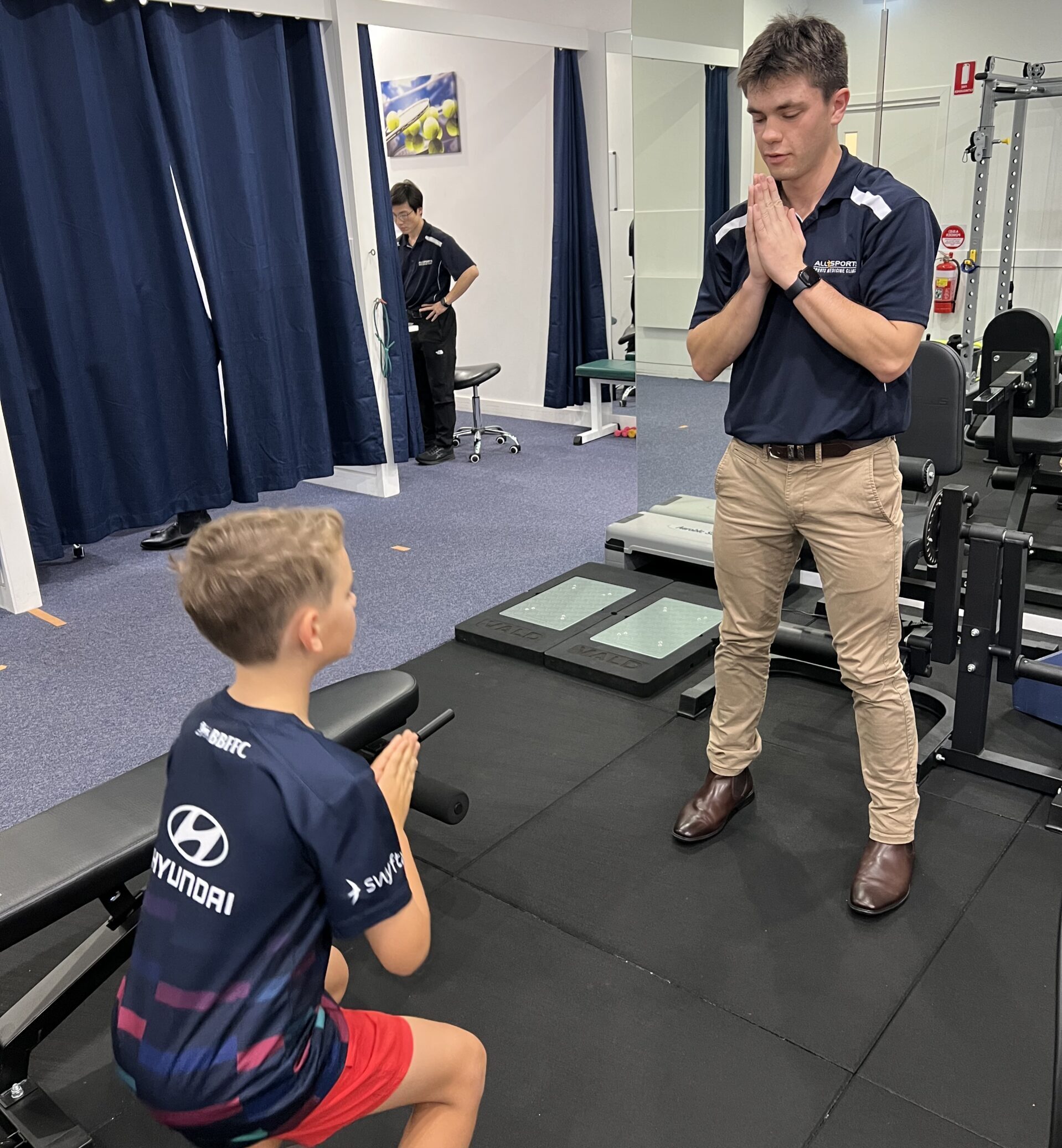
When appropriately designed, progressed and supervised, strength training can be a safe and beneficial form of exercise for children and teenagers. It can help young people develop strength, improve physical fitness, build movement skills and establish healthy exercise habits that last into adulthood (Lloyd et al., 2014; Stricker et al., 2020).
Is strength training safe for kids? The short answer
Yes. For most children and teenagers, strength training is safe when it is appropriate for their stage of development, focuses on good technique and is supervised by a qualified professional.
The goal isn’t to see how much weight a young person can lift. It’s to help them learn how to move well, build strength gradually and develop confidence in their ability to exercise safely.
Research supports youth strength training because it can help:
- Improve muscular strength and physical fitness.
- Develop movement skills, coordination and body control.
- Support healthy bone development.
- Improve physical capacity for sport and everyday activities.
- Contribute to injury prevention when incorporated into an appropriate training program.
- Build confidence and encourage lifelong participation in physical activity.
At Allsports Physiotherapy Wavell Heights, we’re passionate about helping young people build a strong foundation for lifelong exercise and wellbeing. That’s why we developed our Learn to Lift classes for teens.
Our approach focuses on teaching proper movement patterns, building strength and confidence, and helping every young person understand how to train safely and effectively.
What is resistance training for children and teenagers?
Resistance training, also called strength training, is any exercise that makes your muscles work against a load.
That load might be:
- Body weight.
- Resistance bands.
- Free weights, such as dumbbells and barbells.
- Weight machines.
- Other suitable exercise equipment.
For children and teenagers, strength training isn’t simply about lifting heavy weights. It’s about developing strength, coordination, movement skills and confidence through age-appropriate, progressive exercise.
Resistance training can also contribute to healthy bone development and improvements in physical fitness. Building these skills during childhood and adolescence helps establish a foundation for participation in sport, recreational activities and independent exercise later in life (Lesinski et al., 2020; Stricker et al., 2020).
Strength training for kids: 4 common myths busted
Myth 1: “Lifting weights will stunt their growth”
The evidence: There is no evidence that appropriately prescribed strength training stunts growth.
Research does not support the common belief that supervised resistance training negatively affects children’s growth or final adult height (Behm et al., 2008; Malina, 2006).
In fact, bones respond to mechanical loading, and appropriately prescribed weight-bearing and resistance exercises can help support bone development during growth.
The key is to use age-appropriate exercises, progress loads gradually and prioritise good technique rather than focusing on how much weight a child can lift (Faigenbaum et al., 2009; Stricker et al., 2020).
The takeaway: Children don’t need to avoid strength training because they’re still growing. They need an appropriate program that teaches them how to exercise safely.
Myth 2: “Kids need to wait until puberty to start”
The evidence: Children can develop strength and movement skills before puberty.
Children can participate in age-appropriate strength activities well before puberty. Improvements in strength during childhood can occur through adaptations in the nervous system, including better muscle recruitment and coordination (Faigenbaum et al., 2009; Stricker et al., 2020).
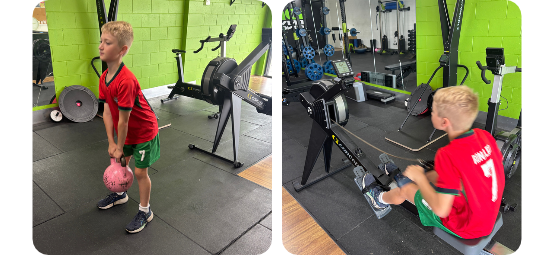
For younger children, strength training might involve squatting, jumping, climbing, pushing, pulling and other bodyweight activities.
As their movement skills, confidence and maturity develop, external resistance such as bands, dumbbells or barbells can be gradually introduced when appropriate.
There is no single age at which every child is ready to begin. Readiness depends on factors such as the child’s ability to follow instructions, maintain safe technique, understand basic coaching cues and participate appropriately in a supervised session.
The takeaway: There is no magic age to start. The program should match the child’s development, ability and readiness, rather than their age alone.
Myth 3: “Strength training increases their risk of injury”
The evidence: Properly supervised strength training can be safe and may help reduce injury risk.
Like any physical activity, strength training carries some risk. However, research supports resistance training as a safe activity for children and teenagers when sessions are appropriately designed, loads are suitable and qualified supervision is provided (Faigenbaum & Myer, 2010; Stricker et al., 2020).
Strength training can also help young athletes develop the physical capacity needed to manage the demands of their sport. When combined with appropriate movement training and other injury-prevention strategies, it may contribute to reducing sports-related injuries (Zwolski et al., 2017).
Risk increases when young people attempt loads beyond their ability, use poor technique, progress too quickly or train without appropriate supervision.
A well-designed program prioritises movement quality, gradual progression, adequate recovery and exercises suited to the individual.
The takeaway: The goal isn’t to avoid resistance. It’s to teach young people how to use it safely and build their capacity over time.
Myth 4: “Strength training is only useful for young athletes”
The evidence: Strength training can benefit a wide range of children and teenagers.
Strength training isn’t just for young people who play competitive sport or want to improve their athletic performance.
Research shows that resistance training can improve muscular strength and other measures of physical fitness in healthy children and adolescents, including those who aren’t competitive athletes (Lesinski et al., 2020; Stricker et al., 2020).
Building strength can help young people develop the physical capacity to participate in physical education, recreational activities, sport and everyday tasks.
There is also emerging evidence that resistance training may support academic outcomes and aspects of cognitive function. However, these findings should be interpreted carefully, as results vary across studies and do not establish that strength training alone will improve every child’s concentration or academic performance (Robinson et al., 2023).
The takeaway: Strength training can support a young person’s overall physical development, not just their sporting performance.
The benefits of strength training for kids go beyond getting stronger
Childhood and adolescence are important periods for developing healthy bones, muscles and movement skills.
Resistance training can be one part of this process, helping young people improve their muscular strength, power and other aspects of physical fitness (Lesinski et al., 2020).
The benefits extend beyond physical performance, too. Developing strength and movement confidence can help young people feel more capable when participating in sport, physical education, recreational activities and exercise.
Regular physical activity more broadly is associated with important health benefits for children and adolescents, including improved physical fitness, bone health and cardiometabolic health. Physical activity also supports mental health and wellbeing (World Health Organization [WHO], 2020).
Developing positive exercise habits early is about much more than performance. It helps young people build the skills, confidence and physical capacity to stay active as they grow.
Strength training is best viewed as one part of a well-rounded approach to physical activity, alongside aerobic exercise, sport, running, jumping, play and other activities young people enjoy.
The goal isn’t to specialise in strength training. It’s to give young people the strength, skills and confidence to enjoy a physically active life.
What does a safe strength training program for kids look like?
A youth strength training program should be progressive, age-appropriate and focused on technique. Exercises should cover the major muscle groups, including the upper body, lower body and trunk.
Multi-joint exercises that use several muscle groups, such as squats, step-ups, rows and push-ups, can form the foundation of a program. Exercises should be selected and modified according to the young person’s ability, experience and goals.
A typical youth resistance training program may include (Stricker et al., 2020):
- 6–8 exercises per session, covering the major muscle groups.
- 2–3 sessions per week, with appropriate recovery between sessions.
- 1–3 sets of 6–15 repetitions, adjusted to suit the exercise, training experience and individual.
- Technique before load, with gradual progression as skills and strength improve.
- Appropriate supervision, particularly when learning new exercises or using free weights.
- A suitable warm-up and recovery period, with adjustments based on the individual and session demands.
These are general guidelines rather than strict rules for every child. Younger or less experienced participants may benefit from simpler exercises, lighter resistance, shorter sessions and more time spent developing movement skills.
A qualified professional can help determine which exercises, loads and progressions are appropriate for each young person.
Learn to Lift classes for teens at Allsports Physiotherapy Wavell Heights

At Allsports Physiotherapy Wavell Heights, our Learn to Lift classes are designed to give teenagers the skills and
confidence to train safely and develop a positive relationship with exercise.
No prior gym or sporting experience is required.
Every participant begins with a one-on-one assessment with an Accredited Exercise Physiologist so we can understand their goals, medical and injury history, current ability and training experience.
From there, participants learn:
- Fundamental movement patterns.
- Squat and deadlift technique.
- Upper-body pushing and pulling.
- Trunk and core strength.
- How to use gym equipment safely.
- How to select appropriate training loads.
- How to structure a balanced workout.
- Warm-up and recovery principles.
- How to progress exercises safely.
- Basic gym etiquette.
- Injury prevention principles.
- How to listen to and respond to their body.
Most importantly, we want young people to leave with skills they can use independently.
Our goal isn’t simply to teach a teenager how to squat or deadlift. It’s to help them understand why they’re training, how to exercise safely, how to progress and how physical activity can become part of managing their own health.
We want young people to develop the confidence to walk into a gym, understand what they’re doing and feel comfortable taking responsibility for their own exercise.
Book a Learn to Lift assessment at Wavell Heights
Book an Initial Exercise Physiology Assessment online or call our Wavell Heights team on (07) 3256 9676 to find out more about our Learn to Lift program.
This article provides general information only and is not a substitute for individual advice. Speak with a qualified health professional if you have concerns about your child’s health, injury history or suitability for a new exercise program.
References
Altermann, W., & Gröpel, P. (2024). Physical fitness is related to concentration performance in adolescents. Scientific Reports, 14, Article 587. https://doi.org/10.1038/s41598-023-50721-0
Behm, D. G., Faigenbaum, A. D., Falk, B., & Klentrou, P. (2008). Canadian Society for Exercise Physiology position paper: Resistance training in children and adolescents. Applied Physiology, Nutrition, and Metabolism, 33(3), 547–561. https://doi.org/10.1139/H08-020
Faigenbaum, A. D., Kraemer, W. J., Blimkie, C. J. R., Jeffreys, I., Micheli, L. J., Nitka, M., & Rowland, T. W. (2009). Youth resistance training: Updated position statement paper from the National Strength and Conditioning Association. Journal of Strength and Conditioning Research, 23(5 Suppl), S60–S79. https://doi.org/10.1519/JSC.0b013e31819df407
Faigenbaum, A. D., & Myer, G. D. (2010). Resistance training among young athletes: Safety, efficacy and injury prevention effects. British Journal of Sports Medicine, 44(1), 56–63. https://doi.org/10.1136/bjsm.2009.068098
Lesinski, M., Herz, M., Schmelcher, A., & Granacher, U. (2020). Effects of resistance training on physical fitness in healthy children and adolescents: An umbrella review. Sports Medicine, 50, 1901–1928. https://doi.org/10.1007/s40279-020-01327-3
Lloyd, R. S., Faigenbaum, A. D., Stone, M. H., Oliver, J. L., Jeffreys, I., Moody, J. A., et al. (2014). Position statement on youth resistance training: The 2014 International Consensus. British Journal of Sports Medicine, 48(7), 498–505. https://doi.org/10.1136/bjsports-2013-092952
Malina, R. M. (2006). Weight training in youth—growth, maturation, and safety: An evidence-based review. Clinical Journal of Sport Medicine, 16(6), 478–487. https://doi.org/10.1097/01.jsm.0000248843.31874.be
Robinson, K., Riley, N., Owen, K., Drew, R., Mavilidi, M. F., Hillman, C. H., Faigenbaum, A. D., Garcia-Hermoso, A., & Lubans, D. R. (2023). Effects of resistance training on academic outcomes in school-aged youth: A systematic review and meta-analysis. Sports Medicine, 53, 2095–2109. https://doi.org/10.1007/s40279-023-01881-6
Stricker, P. R., Faigenbaum, A. D., McCambridge, T. M., & Council on Sports Medicine and Fitness. (2020). Resistance training for children and adolescents. Pediatrics, 145(6), e20201011. https://doi.org/10.1542/peds.2020-1011
World Health Organization. (2020). WHO guidelines on physical activity and sedentary behaviour. https://www.who.int/publications/i/item/9789240015128
Zwolski, C., Quatman-Yates, C., & Paterno, M. V. (2017). Resistance training in youth: Laying the foundation for injury prevention and physical literacy. Sports Health, 9(5), 436–443. https://doi.org/10.1177/1941738117704153
